December 2025
Hiring Growth in Commodities and Trading

Hiring across commodities and trading has gained momentum, with firms expanding headcount to manage rising volumes, tighter margins, and increasingly fast-moving markets. Growth is particularly strong in the UK, Germany, Switzerland, the Netherlands, Singapore, and the US, where energy, power, gas, metals, and agri desks are scaling to capture new market opportunities and enhance overall coverage.
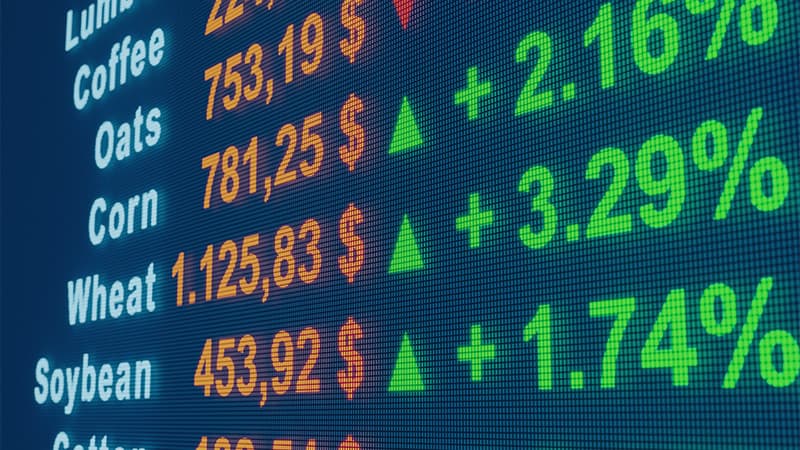
Recent market data explains part of this momentum. The World Bank’s Group report shows sharp price swings across energy, metals, and agricultural products, driven by supply shocks and demand. Volatility creates opportunity, which pushes trading organizations to strengthen their trading, risk, analytics, and operational teams.
Commodities remains one of the most active hiring areas. Firms want traders who understand supply patterns, optionality, and disciplined execution. They also want hybrid profiles, such as traders or analysts who work well with data and support decision-making with modeling and market signals.
Operations and logistics hiring is rising as well. Strong scheduling and physical delivery teams reduce execution risk and protect margins, so firms continue to invest as trading volumes grow.
Talent shortages
At Selby Jennings, we are seeing shortages in several key areas:
- Traders with strong data capability remain limited in all major hubs.
- Cross-commodity and cross-asset profiles are in short supply, especially in Europe and Singapore.
- Risk managers with both commercial judgment and control experience are difficult to secure.
- Scheduling and physical operations talent is tight in the US and Europe due to competition from utilities and producers.
- Analysts who can model markets and support trading strategy with Python or SQL are among the hardest profiles to hire.
These shortages increase competition, shorten hiring windows, and push firms to move faster when they identify strong candidates.
Growth in analytics, quant, and data-driven roles
Demand for analytics and quant talent keeps rising as trading businesses shift toward structured and model-driven decision-making. Our recent research on quant hiring trends shows ongoing investment in data, modeling, and systematic trading capability across the industry.
Teams want analysts who can work with real-time market data, build pricing tools, and support exposure management. Python and SQL are now standard expectations.
We’re also seeing more roles that sit between trading and technology, with these hires building dashboards, automating reporting, and improving signal. Firms want people who can turn market ideas into workable models without slowing down the desk.
Analytics demand is also growing across power and gas markets. These markets need more forecasting, scenario modeling, and short-term optimization work. Strong analytics capability is becoming central to trading performance.
Firms that hesitate often lose these candidates to faster competitors.
Risk management hiring remains strong
Risk teams continue to expand across Europe, the US, and Asia. High volatility and tighter regulatory expectations mean firms want risk leads who can manage exposure, challenge traders when needed, and maintain controlled decision-making.
We are also seeing growth in market risk, quant risk, and model oversight roles. These positions support teams that trade complex products or run high-volume strategies. Candidates need technical depth and clear judgment, which limits the size of the talent pool.
There is a noticeable shift toward hiring risk managers who understand cross-commodity activity. Firms want people who can assess exposure across correlated markets and communicate risk clearly to the front office.
Demand is also rising for risk professionals who can build reporting tools and support automation. This blend of risk and data skills is in short supply, especially in London, Zurich, Houston, and Singapore.
Investment into multi-asset and hybrid desks
More firms are running integrated desks that move capital across products based on opportunity. This is supported by industry analysis showing increased reliance on diversified commodity and derivative strategies across global trading firms.
These desks want traders and analysts who can work across power, gas, emissions, oil, metals, or FX. Flexibility and strong fundamentals matter as much as deep product expertise.
Hybrid desks also depend on analysts who understand pricing relationships across markets, including spreads, correlation behavior, and volatility patterns.
We are seeing increased investment in leadership roles that coordinate multi-asset coverage and maintain consistent risk and execution standards.
Further investment into multi-asset and hybrid desks
The move toward hybrid desks continues, and firms want teams that shift with market cycles without rebuilding headcount each time. This is driving sustained investment in broad-skilled talent who can pivot into new markets quickly.
Technology investment supports this shift. Firms want data sources, risk tools, and trading systems integrated across products. Candidates who understand how different markets behave under shared infrastructure are highly valued.
Operational hiring is also rising. Cross-asset trading increases settlement complexity, collateral movement, and reporting needs. Operations staff with multi-product experience reduce bottlenecks and keep execution clean.
This trend is global. London, Amsterdam, Geneva, Singapore, New York, and Houston show the highest activity. Talent shortages appear in every region, especially for traders and analysts who can move between commodities and financial markets without a long learning curve.
Senior and specialist talent driving most hiring activity
The strongest hiring momentum sits at senior or specialist levels. Firms want people with clear track records, strong execution habits, and the ability to influence desk performance.
Experienced traders, senior analysts, risk leads, and operations specialists remain in high demand.
Why hiring has accelerated
Several factors sit behind why hiring is increasing:
- Continued market volatility.
- Structural changes driven by the energy transition.
- Supply chain pressure affecting power, gas, and metals.
- A shift from manual judgment to data-backed analytics.
- The rise of cross-asset strategies
These dynamics create strong competition for talent and tighten hiring windows.
What this means for firms hiring now
If you plan to expand or strengthen your trading team, several points matter.
- Move quickly. Strong candidates have short availability and often run multiple processes.
- Be clear on scope. Clear expectations improve hiring outcomes and reduce failed processes.
- Assess how candidates make decisions, not just what they know about the market.
- Look for cross-functional experience. These profiles adapt faster and support stronger desk performance.
- Invest in operations and risk. Strong support functions protect the front office.
Selby Jennings partners with trading houses, hedge funds, banks, utilities, producers, energy firms, and merchants across the UK, Europe, the US, and Asia. We help clients recruit traders, analysts, risk leads, and operations specialists in markets where the supply of talent remains tight. Our reach across commodities, multi-asset desks, and data-driven trading functions gives access to candidates who are not visible through traditional hiring channels.
If your organization is planning to hire or wants to understand current talent conditions, request a call back from our team. A short conversation can outline the talent available in your market, expected timelines, and the steps needed to secure strong candidates before competitors move first.