

July 20263 min read
Data Center M&A in the AI Era
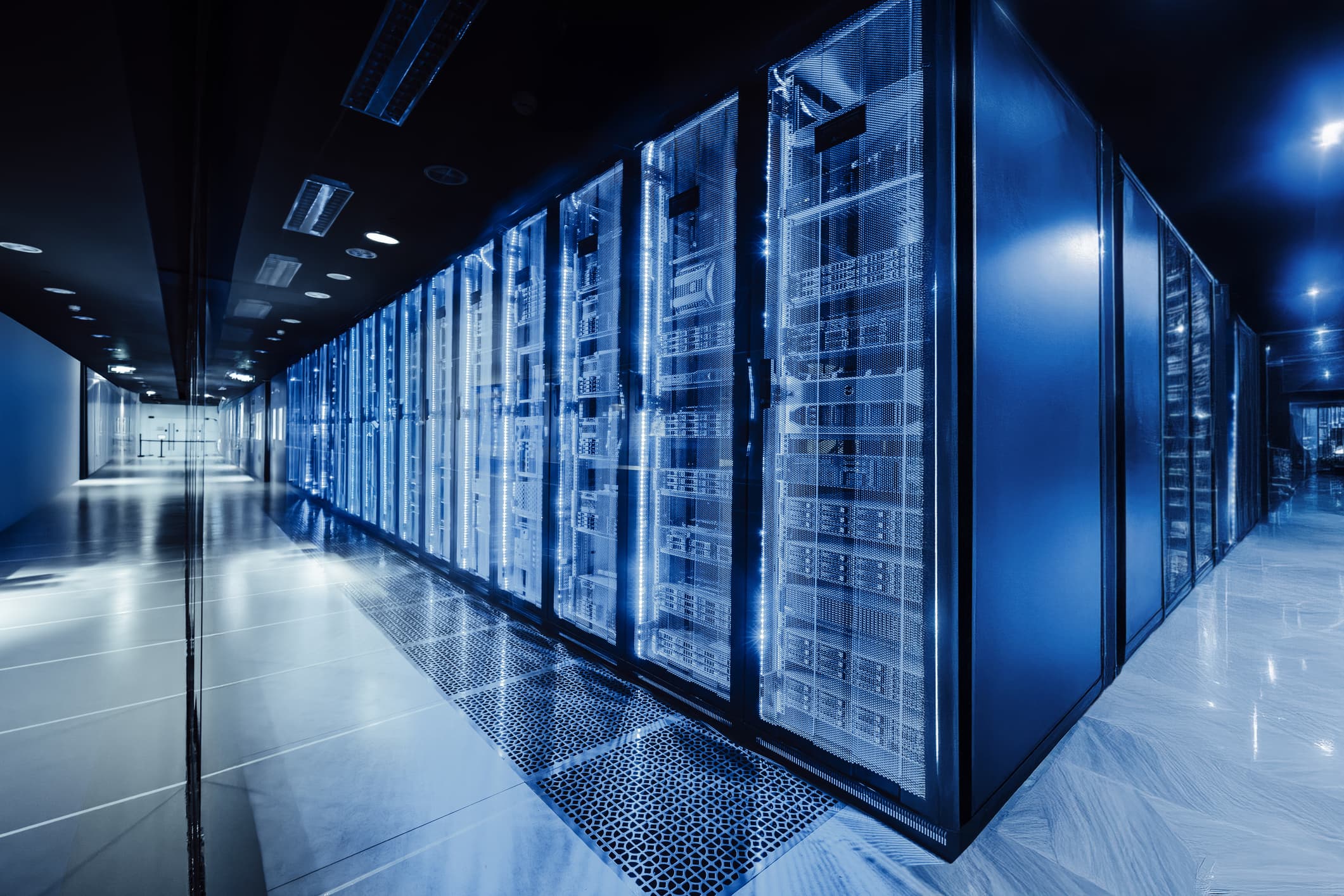
How are platform acquisitions, hyperscaler partnerships, and evolving deal structures reshaping digital infrastructure investment?
Over the past two years, data center M&A has moved from individual asset acquisitions to multi-billion-dollar platform transactions. In 2025 alone, global data center M&A reached a record $69 billion, as investors sought exposure not only to digital infrastructure but also to the power generation and grid capacity needed to support accelerating AI demand.
As transaction values have grown, so too has the complexity of executing them. Today's deals require far more than traditional infrastructure or real estate expertise. Investors must assess power availability, technical infrastructure, hyperscaler demand, operational resilience and long-term expansion potential alongside financial performance.
That shift is changing the profile of the professionals firms need to hire. Capital is entering the market faster than experienced talent, leaving infrastructure funds, investment banks, hyperscalers, and developers competing for a limited pool of specialists who can bridge finance, technology, and energy.
What each type of data center deal demands from your team
The transactions of today's data center market are structurally different from traditional infrastructure deals. Whether acquiring a hyperscale platform, forming a joint venture or backing a development pipeline, each transaction places different demands on investment teams.
Rather than applying a standard M&A playbook, firms increasingly need specialists who understand the commercial, technical and operational considerations unique to each deal structure.
|
Deal Type |
Commercial Focus |
Operational Focus |
Key Risks |
| Platform acquisitions | Revenue growth, customer mix | Power capacity, expansion | Tenant concentration, data regulation |
| Hyperscaler JVs | Long-term contracts, JV structure | Campus development | Compliance, governance |
| Sale-leasebacks | Lease quality, tenant retention | Upgrade costs | Permitting, landlord obligations |
| Fund consolidations | Scalability, portfolio value | Business integration | Integration risk, conflicts |
| Development platforms | Market demand, exit potential | Site selection, construction | Permits, grid access |
As deal structures become more specialized, so too do the teams executing them. The commercial priorities, operational challenges and technical risks vary significantly between transaction types, requiring expertise that extends well beyond traditional financial analysis.
The new drivers of data center valuation
Unlike traditional infrastructure assets, data centers derive their value from factors that extend well beyond location, occupancy, and financial performance. Investors must also evaluate how an asset will perform operationally. In other words, whether it can support future AI demand, and how resilient it will remain as technology develops over time.
Power is not simply an operating cost, and it is often the defining factor in an asset's value. Securing grid connections or long-term power agreements can take years, making access to reliable energy a competitive advantage in its very own right. Many acquisitions are driven as much by access to power and developable land as by the data center itself, so its importance cannot be understated.
Traditional infrastructure due diligence focuses on engineering reports, asset condition and financial performance. Data center acquisitions require a broader technical assessment, including:
- IT infrastructure
- Cooling systems
- Redundancy and resilience
- Network connectivity
- AI readiness
- Expansion capacity
Each of these factors can materially influence an asset's operational performance, future scalability and valuation.
AWS, Google Cloud, and Meta are all desirable hyperscale customers, but while these tenants can provide stable long-term income, there is also a potential concentration risk. Understanding the strength of these relationships, lease structures, and renewal prospects is therefore a critical part of evaluating an investment.
Investors must assess whether a site has sufficient land, power, cooling capacity and connectivity to support future AI workloads and continued expansion. Naturally, assets with clear growth potential are and will command a premium.
Capacity utilization, uptime, maintenance practices and operational resilience have a direct impact on financial performance, and without a clear understanding of how a facility operates, it becomes difficult to assess future cash flows, expansion potential, or long-term value accurately.
Taken together, these considerations are changing how investment teams are evaluating data center opportunities. Financial analysis will always remain essential, but more than ever, successful transactions are increasingly depending on the many technical and operational factors at play that determine a data center’s performance over its lifetime.
How investment firms are structuring data center deal teams
Organizations are bringing together specialists from across finance, engineering, operations and energy to ensure technical and commercial risks are assessed in parallel throughout the deal process. Rather than relying on a single model, firms are typically adopting one of three approaches:
Traditional investment teams retain responsibility for valuation, structuring and negotiations, drawing on external advisers for more technical due diligence, power assessments and operational expertise.
Some organizations have strengthened their internal capabilities by recruiting specialists from data center operators, telecommunications businesses, and the energy sector. These professionals bring a deeper understanding of the infrastructure itself, although they are often paired with experienced M&A professionals to lead transaction execution.
Increasingly, firms are combining financial and technical expertise within a single transaction team. A typical deal may involve:
- An investment professional leading commercial negotiations
- A technical operating partner with data center expertise
- A power or utilities specialist
- External engineering advisers
- Commercial due diligence consultants
This integrated approach allows investment decisions to reflect both financial performance and the technical realities that determine an asset's long-term value.
The future of data center M&A
The pace of investment into digital infrastructure shows little sign of slowing, but the factors that determine a successful acquisition are changing. Financial modelling and transaction experience remain fundamental, yet they are no longer enough on their own.
As AI infrastructure evolves, investors must evaluate power availability, technical resilience, operational scalability and long-term growth potential alongside traditional commercial metrics. Firms that bring these perspectives together earlier in the transaction process will be better positioned to identify opportunities, manage risk and create value.
For investment firms, the challenge is no longer simply deploying capital. It is building the expertise needed to deploy that capital with confidence in an increasingly complex market.
Strengthen your data center investment team
Whether you're expanding an established digital infrastructure investment team or making a critical strategic hire, securing professionals with the right blend of financial, technical and operational expertise has never been more important.
Selby Jennings partners with private equity firms, infrastructure investors, investment banks and digital infrastructure businesses to identify the specialist talent needed to execute increasingly complex transactions. Through executive search, market mapping and specialist talent advisory, we help organizations build investment teams equipped to evaluate opportunities, manage risk and create long-term value.
Request a confidential call back to discuss your hiring strategy.
Explore Related Insights
Let’s talk talent
Need the right talent for your next hire, or guidance on your people strategy? Leverage our experience to help you and your business today.
Advancing your career
Want to be one step ahead in your career? Our industry experts have the relationships and global reach to realise your full potential.