

Quantitative Analytics, Research & Trading: Mid-Year 2026 Talent Insights
June 2026
Quantitative Analytics, Research & Trading: Mid-Year 2026 Talent Insights
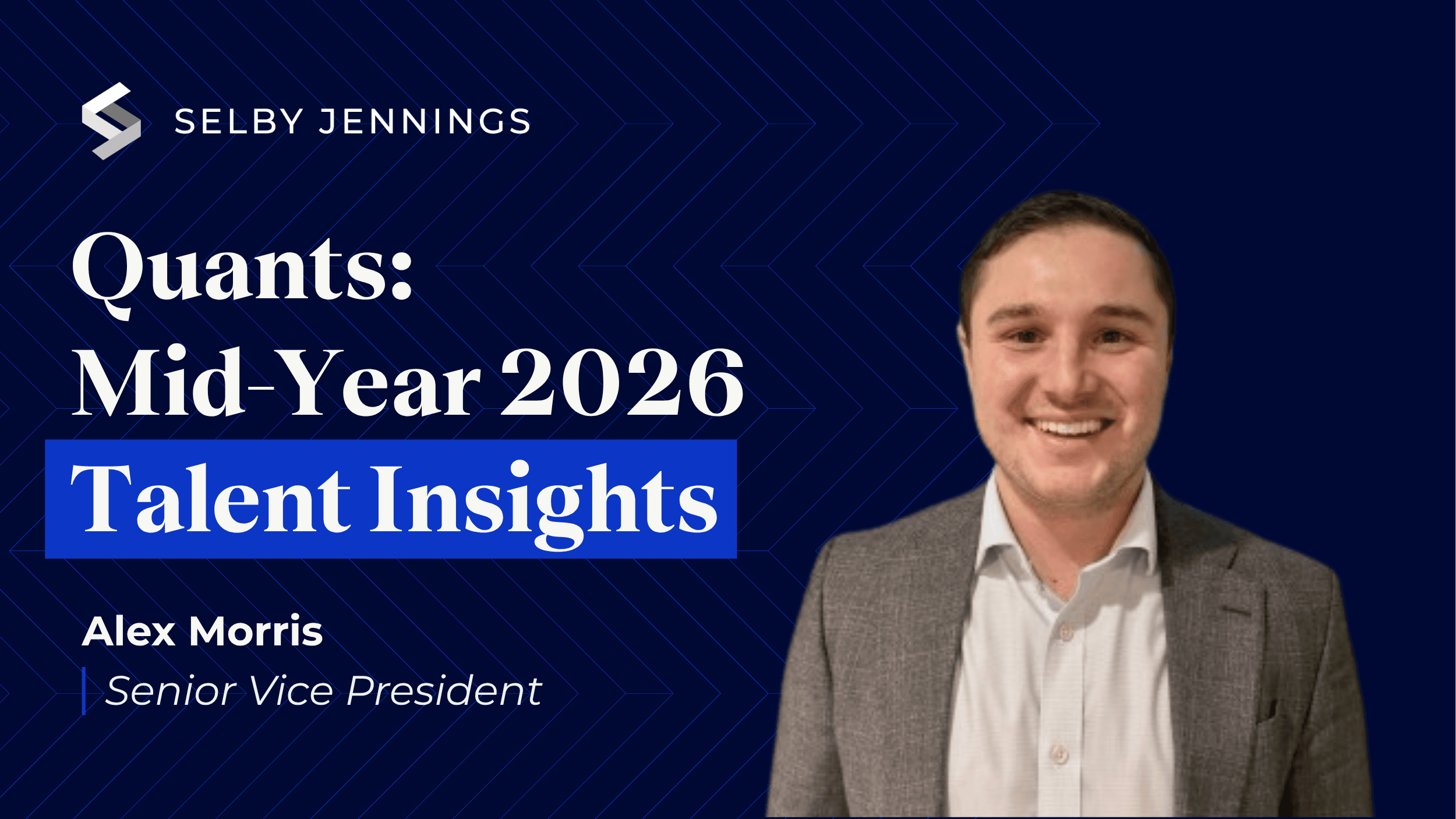
When we published our Europe 2026 outlook at the start of the year, the quantitative analytics, research and trading market was entering a period of intense competition for talent. Six months on, we sat down with Alex Morris, Senior Vice President at Selby Jennings London, to assess how the market has developed so far in 2026 and what firms and professionals should be watching as they plan for the second half of the year.
What trends have defined the quantitative talent market in the first half of 2026?
"One of the biggest themes has been the continued increase in notice periods and non-compete restrictions, particularly across the buy side. Several candidates working at multi-strat hedgefunds have seen increases from 6 months to 12 months or longer, making talent acquisition increasingly challenging.
"As a result, firms looking to make immediate hires have had to explore alternative talent pools. We've seen greater interest in PhD graduates with relevant financial applications, professionals moving from banks into the buy side, and candidates who have recently become available following team restructures. The challenge for hiring managers is that it has become trickier to plan talent needs a year or more in advance when market conditions can change so quickly."
How has demand changed across quantitative trading and research teams?
"Strategy diversification has remained a major trend throughout 2026. Firms continue to look beyond the most established markets and are increasingly interested in talent with expertise in less crowded areas, including Indian options, APAC equities, and emerging markets.
"At the same time, the competition for alpha has intensified. As firms search for new sources of edge, we've seen significant demand for professionals specializing in market microstructure, monetization, and execution. Candidates who can improve trading efficiency, optimize execution, or provide differentiated market insights have been particularly sought after during the first half of the year."
What did bonus season reveal about the market this year?
"Compensation outcomes were more varied than we've seen in recent years. While base salaries remained relatively stable across much of the market, there were notable exceptions in machine learning roles, where firms continue to compete directly with technology companies for talent.
"On the buy side, compensation outcomes reflected differences in fund performance. Some firms had exceptionally strong years, while others were more subdued. We also saw stronger compensation growth for roles linked to execution, market microstructure, and monetization, highlighting the increasing value firms place on these functions."
What advice would you give hiring managers for the remainder of 2026?
"The market remains exceptionally competitive for top quantitative talent. In many cases, the strongest candidates are being considered by nine or ten firms simultaneously.
"Speed and decisiveness therefore remain critical. Firms that maintain momentum throughout the interview process and make timely decisions are often far more successful than those that delay while assessing additional options. We saw several examples during the first half of the year where organizations lost highly sought-after candidates simply because the process took too long.
"Hiring managers should also focus on communicating the long-term opportunity. Candidates want to understand how a role fits into their broader career goals, what progression looks like, and how they can contribute to the future direction of a business.
"When it comes to offers, firms should be prepared to put their strongest package forward from the outset. While there can be a temptation to negotiate from a lower starting point, the reality is that top candidates often have multiple opportunities available to them. A strong initial offer can be the difference between securing a hire and restarting the search from scratch."
Which locations have seen the most hiring activity this year?
"Hiring activity in the Middle East has softened somewhat compared to previous years, largely due to geopolitical uncertainty.
"Demand across London and Paris has been particularly strong. We've also seen firms increase investment in locations with highly skilled talent pools and lower operating costs, including Budapest, Prague, and Mumbai. Many organizations are viewing these markets as strategic locations for long-term growth while maintaining access to strong quantitative talent."
What advice would you give quantitative professionals considering a move?
"For professionals who already know they are likely to explore new opportunities in the future, there is often little advantage in waiting another year before making a move. Given the length of non-compete periods across the market today, acting sooner can often support faster long-term career progression.
"In many cases, compensation can be matched or bought out during the year, meaning professionals are not necessarily sacrificing short-term earnings. Ultimately, long-term career growth is driven by progression, increased responsibility, and access to the right opportunities over time. The earlier professionals position themselves for that growth, the greater the impact on their long-term earning potential."
To discuss your hiring plans or explore our current quantitative analytics, research and trading career opportunities, request a call back or browse open roles.
Explore Related Insights
Let’s talk talent
Need the right talent for your next hire, or guidance on your people strategy? Leverage our experience to help you and your business today.
Advancing your career
Want to be one step ahead in your career? Our industry experts have the relationships and global reach to realize your full potential.