

Investment Banking Hiring: Why Engineering Talent is Becoming Harder to Secure
July 20263 min read
Investment Banking Hiring: Why Engineering Talent is Becoming Harder to Secure
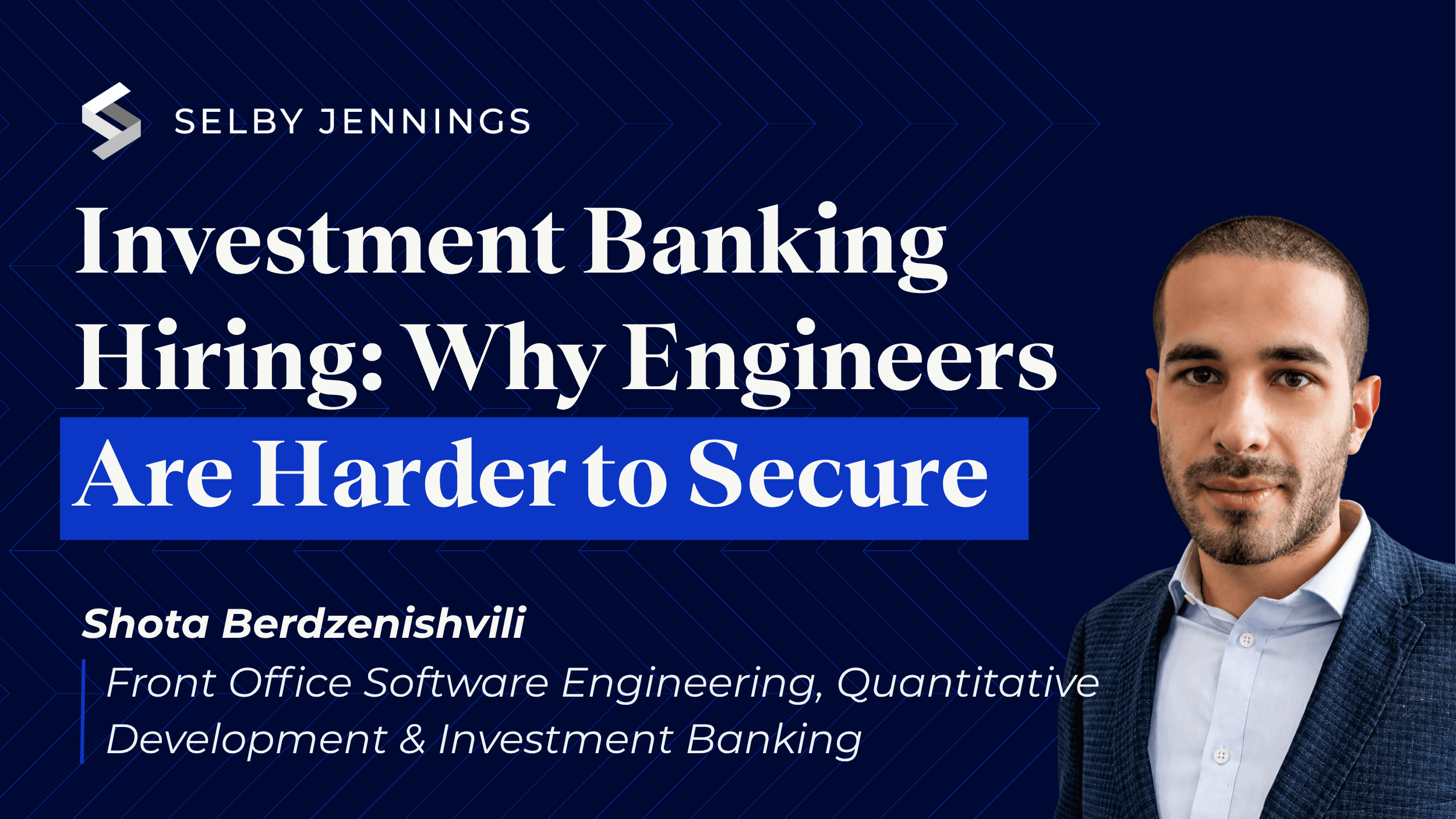
If it feels like the talent pool for engineers is shrinking, you’re not imagining it.
We sat down with Shota Berdenishvili, our Principal Consultant covering investment banking technology, to look at why the number of top-level candidates is falling and what firms can do to future-proof their business against talent shortages.
Front-office engineers with banking experience are very specialised. What effect is this having on recruitment?
“Base salaries have gone up. £140k – £150k base is typical now, with some going as high as £170k or £180k. One major bank for example, is paying above the market average at the moment because they’re playing a bit of catch-up, building a team that is business-aligned as well as technically strong.
"If you’re headhunting, you’re going to have to be quite aggressive with your offer, especially if you want to avoid losing a candidate to a counter offer. Every single candidate I’ve placed this year has received a counter offer, which is unusual.
“I had one recently where the counter offer was about £70k more. That is not uncommon for a hedge fund, but this was an investment bank, and that level of uplift is unheard of. It tells you the competition for engineers is high, and banks can’t absorb the loss of business and disruption that comes from losing a talented engineer.”
Does that inevitably limit the pool of available talent?
“It does. Engineering talent is niche to begin with, but front–office, low-latency engineers with banking experience are a niche within a niche. If you’re locked into a salary band and can’t put at least £20k to £30k on top, it’s very hard to convince someone to leave an existing role. And even then, you’re probably going to get counter offered.
“So, it’s not that the number of engineers is dropping, it’s that the roles are becoming more specialised and demand is outstripping supply unless you can make your offer more attractive.”
How much is AI affecting the types of available roles?
“It is changing the shape of the team more than the size of the market. A project that used to need 15 people can now be delivered by a smaller team, faster. So the bottom gets squeezed, the grad and junior roles where the work is more repeatable.
"But that doesn't mean banks need fewer engineers overall; it means they need different ones. Someone senior who can direct that smaller team and use the tools well is worth more now, not less. The value moves up. So I'd tell candidates the junior rungs are getting harder to get onto, and I'd tell banks not to read the headcount savings as a reason to stop hiring at the top, because that's exactly where the competition is."
What should investment banks be thinking about for future hiring and potential talent shortages?
"The one I'd watch is blockchain. It's early, but the direction of travel is clear. JP Morgan, Goldman, HSBC, UBS and BNY are all putting real money into running traditional assets on that infrastructure, and when that many of the big names move at once it usually becomes the standard.
"For hiring, that's a small pool getting a lot of attention. The engineers who've actually built on this are rare, so if a bank waits until the roles are urgent, they're competing for a handful of people against everyone else who waited. I'd rather see banks bring in strong engineers now who can grow into it than try to buy the finished article in two years when the price has doubled.
"The thing that holds banks back here is pay bands. If your structure won't let you move for the right person, you lose them, simple as that. That's a harder fix at a bank than a fund, I get it, the hierarchy and the process are real. But it's the single thing most likely to cost you the hire."
Build your team. Shape your future.
Whether you're making a critical hire today or planning how your team will evolve over the next 12–24 months, Selby Jennings can help you identify, attract, and secure the specialist talent needed to stay ahead. To discuss your hiring strategy or a specific requirement, request a call back for a confidential conversation.
Or, if you’re a fintech professional considering your next career opportunity, browse our latest opportunities here.
Explore Related Insights
Let’s talk talent
Need the right talent for your next hire, or guidance on your people strategy? Leverage our experience to help you and your business today.
Advancing your career
Want to be one step ahead in your career? Our industry experts have the relationships and global reach to realise your full potential.