Risk Management USA Hiring Outlook 2026
January 2026
Risk Management USA Hiring Outlook 2026
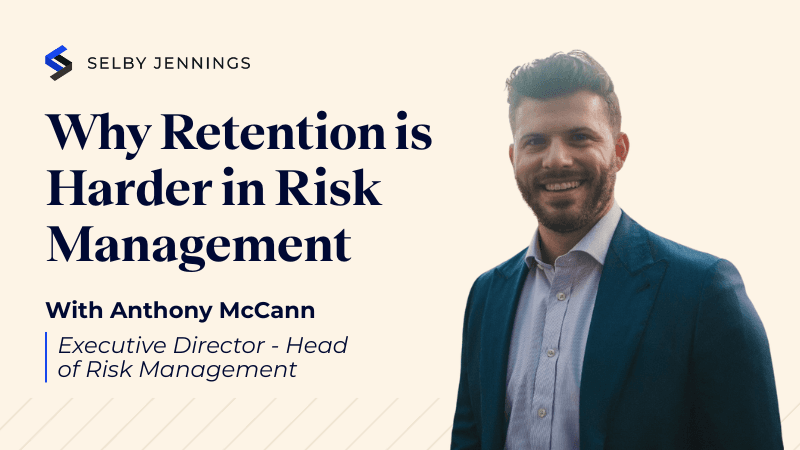
Risk teams are evolving in 2026 as their remit continues to expand. As firms strengthen governance, adapt to the growing use of AI, and respond to a wider range of emerging risks, demand for experienced risk professionals has increased across both buy side and sell side institutions – making hiring and retention more challenging than ever.
In this outlook, Anthony McCann, Executive Director – Head of Risk Management at Selby Jennings, discusses what risk leaders need to consider when hiring and building risk teams this year.
What changed in risk management in 2025, and how will it shape 2026?
"AI risk moved firmly to the top of the agenda in 2025. Firms began to focus not just on using AI, but on understanding, governing, and controlling it. Alongside this, handling emerging risks gained more attention as organizations tried to stay ahead of issues rather than being reactionary.
"Another notable change was the increased emphasis on first-line risk teams, with businesses taking greater ownership of risk rather than relying solely on centralized functions.
"When it came to hiring, buy side firms also became less willing to wait out long non-compete periods unless absolutely necessary, which influenced how and where they sourced talent. These themes will continue to influence hiring priorities and team structures in 2026."
What hiring challenges will the risk management sector face in 2026?
"One of the biggest challenges is keeping pace with the evolution of AI and understanding how it can genuinely support risk professionals in their day-to-day work without over-reliance.
"Besides this, attracting and retaining the best risk talent continues to be one of firms’ biggest priorities as demand continues to outpace supply. The constantly moving regulatory landscape adds another level of complexity, as firms always need risk teams capable of anticipating change, interpreting new requirements, and applying them effectively."
What are the hardest-to-fill risk management roles in 2026?
"Demand for risk talent is broad and spans many key verticals, with firms competing for experienced talent across the following areas:
- Buy side risk continues to be highly competitive, particularly for quantitative risk professionals, equity long-short risk specialists, credit trading and convertibles expertise, and volatility and options risk managers.
- Market risk teams are finding it difficult to hire credit trading risk managers, options risk specialists across rates and equities, and experienced risk analytics professionals.
- Liquidity, treasury, and interest rate risk roles remain challenging to fill across both first- and second-line functions, reflecting ongoing pressure in balance sheet and funding oversight.
- Corporate credit risk.
- Specialist risk roles continue to see strong demand, including fraud and AML data science, consumer credit specialists in areas such as auto secured lending, operational risk roles within asset management and product governance, and technology risk positions covering AI, data, and controls.
- Audit hiring is active across capital markets, financial crimes, IT and cyber, treasury, model risk, and data-focused technology audit."
How should firms update their risk management hiring strategy for 2026?
"Simplify your hiring process and keep it consistent. A clear, fluid interview structure helps you move efficiently without losing strong candidates in a highly competitive market.
"Also take time to talk about how your role differs from candidates’ current positions, what problems they will be responsible for solving, and how the firm will support long-term career progression. Professionals want to understand the expectations, impact, and visibility of their role within the business, alongside the fundamentals like pay and flexibility."
How are candidate expectations changing in risk management in 2026?
"Candidates are increasingly reluctant to move laterally unless there is a clear increase in scope, responsibility, or compensation. Many are looking beyond traditional firm names and are more open to exploring alternative platforms and business models.
"Flexible working is still important across the board, although more candidates now accept being in the office a set number of days as return-to-office expectations have become more established.
"Another strong trend is risk talent showing strong interest in moving to the buy side earlier in their career, as later transitions can become more difficult.
"Lastly, most risk professionals are not actively applying for roles. Hiring managers need to be proactive in their approach and mindful of their reputation in the market, as passive candidates dominate much of the available talent pool."
How will AI change risk management teams in 2026?
"AI is completely changing how risk decisions are made. Data-driven insights and predictive analytics are enabling faster and more informed decision-making, while boards are increasingly adjusting risk appetite in real time based on AI-led scenario analysis.
"Regulators are also driving greater focus on explainable AI, where decisions need to be transparent and auditable. That naturally limits how far AI can go on its own, which is why judgement-heavy decisions, particularly around regulatory issues and strategic risk, will continue to sit with people.
"As routine work like data gathering and control testing becomes automated, risk teams are operating more efficiently and, in some cases, leaner. New roles are emerging around AI governance and model oversight, however, and risk functions are working more closely with IT, data science, and compliance.
"First-line teams are also becoming more empowered through AI dashboards, reducing reliance on centralized risk functions and changing workflows across firms."
Which risk management tasks and processes are being automated?
"Automation is expanding across risk and regulatory reporting, risk assessments and identification, control testing, and GRC activities such as regulatory mapping. AI governance and model risk management are also becoming more structured and system-driven."
Which regulations will impact risk management teams in 2026?
"AI governance executive orders are a major focus, alongside ongoing federal bank capital and liquidity reforms. Cybersecurity regulations also continue to drive hiring and investment as firms strengthen controls and oversight."
Where are firms increasing their risk management headcount in 2026?
"Buy side firms, including proprietary trading shops, hedge funds and private credit platforms, are hiring across multiple levels for experienced risk managers and quantitative risk talent.
"On the sell side, firms are adding headcount in AI governance, market risk for credit trading and options, interest rate and capital risk, technology risk, and audit functions spanning IT and corporate audit.
"Outside traditional banking, fintech and consumer-focused firms are hiring in areas such as auto secured lending, data science and fraud, and financial crimes modeling."
What risk management compensation trends will impact hiring in 2026?
"Some firms are proactive about staying competitive, but others remain tight on compensation, which makes it harder to attract top talent. Buy side firms continue to hire from the sell side, adding pressure to already competitive markets.
"Lower cost-of-living hubs have also become more competitive. Compensation in these locations has closed the gap with major financial centers, and now many candidates earn similar packages while benefiting from lower living costs."
How should firms adjust risk management pay and incentives to stay competitive?
"Always look beyond headline compensation. Ask yourself why someone performing well at a competitor would choose your platform, and whether your offer reflects that reality – understanding what truly matters to employees is critical.
"Staying competitive means rewarding top performers appropriately, even when budgets are tight, and highlighting the critical role the risk function plays in your business. When risk professionals feel their work is recognized, impactful and properly compensated, retention becomes far easier."
What’s causing risk management retention challenges in 2026?
"The competitive market for strong mid-level talent is one of the biggest retention challenges within risk teams. AI-driven change and the growing appeal of buy side and alternative platforms are also contributing to movement away from traditional institutions."
How can leaders reduce attrition risk and strengthen retention in risk management?
"Investment in career development, paying above market rate for top performers, and supporting individuals with their career goals are critical.
"Creating internal opportunity and visibility, ensuring work feels impactful and tied to business goals, and giving strong performers autonomy all support retention, as do competitive rewards beyond base salary."
How can leaders build stronger risk management teams in 2026?
"Stronger teams start with upskilling across AI literacy and embedding a culture of risk awareness. Retention and wellbeing also need to remain priorities, alongside ensuring teams have strong decision-making skills in high pressure situations.
"Above all, being proactive and preparing teams for emerging risks, rather than reacting after issues arise, will define the most effective risk functions in 2026."
Speak with Anthony McCann and the Selby Jennings risk management team
If your firm is hiring across risk management in 2026, request a call back from Anthony McCann and his team for support with your hiring strategy, specialist searches across all risk verticals, compensation benchmarking, and competitor analysis. Learn more about our risk management talent solutions.
Risk management professionals exploring new opportunities can create an account and submit their resume to access exclusive roles and personal support from the talent experts at Selby Jennings. Browse our latest risk management vacancies at industry-leading firms.