

Quantitative Analytics, Research & Trading
December 2025
Quantitative Analytics, Research & Trading: 2026 Talent Insights
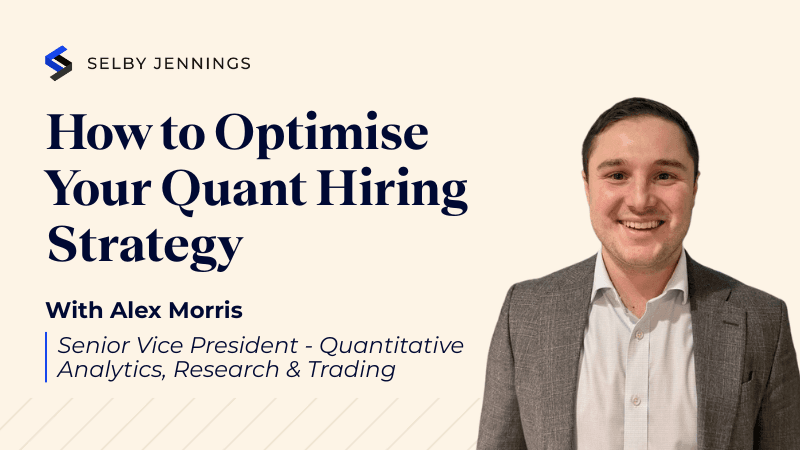
As we look ahead to 2026, the quantitative finance space is experiencing one of its most competitive hiring landscapes yet. Non-compete periods are getting longer, firms are diversifying their strategies, and the demand for machine learning talent is growing across both buy and sell side.
In this video, Alex Morris, Senior Vice President at Selby Jennings London, breaks down the key talent trends shaping the future of quantitative analytics, research, and trading. The insights are also explored in a written summary below.
What changed in quants in 2025, and how did that impact hiring?
"One of the biggest shifts in 2025 was the increase in notice and non-compete periods across the buy side. It’s now common for professionals to face 12-month sit-outs, with some clauses stretching to 24 or even 36 months. This has significantly impacted hiring timelines and talent availability, making forward planning essential for firms looking to secure quant talent.
"We also saw growing diversification in trading strategies. Traditional high-frequency trading (HFT) firms began expanding into longer holding periods - hours or even days - while mid-frequency firms started building out market making capabilities. Elsewhere, macro funds have been hiring equity quant profiles to broaden their investment strategies. Digital assets also made a strong return, with renewed hiring demand across the board."
What should firms and professionals prioritise in 2026?
"In today’s market, timing is everything. For firms, the advice is clear: start exploratory conversations before bonus announcements. Candidates generally know what they’re expecting and whether they’re open to new opportunities. Getting ahead of the bonus cycle can be the difference between securing a top quant and missing out.
"Secondly, streamline your interview processes. In what may be the most competitive hiring space globally, extended interview timelines are a major risk. Firms running 8- or 9-round processes often lose out to those who can move faster. Building momentum and acting decisively can significantly increase your chances of success.
"For professionals, being ready to engage in early conversations and knowing your value in this high-demand market will be key to making the most of 2026 opportunities."
How are AI and machine learning reshaping quant roles?
"Demand for AI and machine learning talent soared in 2025. Many firms, on both the buy and sell side, have built centralised AI teams using large language models (LLMs) and internal chatbots to automate processes and reduce operational costs. This trend is set to continue, especially as cost-efficiency becomes a key performance driver.
"Beyond centralised automation, there has been significant growth in applied ML teams, where machine learning and deep learning are being used for desk-specific improvements. From signal generation and alpha research to execution and risk modelling, quant professionals with applied ML experience are increasingly valuable. Firms are now looking for quants who can build and implement these solutions in production environments, not just test them in isolation."
To discuss your hiring plans for 2026 or explore our current quantitative analytics, research and trading opportunities, request a call back or browse open roles.

FAQ: Quant hiring, careers & compensation in 2026
Speed-to-offer and market timing are critical. Quant candidates, especially those in machine learning, crypto, and systematic macro, are fielding multiple offers simultaneously – particularly post-bonus season. Delays in the offer process or a lack of role clarity can cause high attrition during negotiations. Structured processes and strong employer branding are key to securing top talent.
We combine deep market specialisation with global scale. Our quant consultants speak the language of the roles they place – whether that’s alpha generation, execution latency, or PnL modelling – and we have an active network of passive candidates, many of whom are not on the open market. We offer permanent, contract, and multi-hire solutions tailored to your team’s structure and growth ambitions.
Learn more about our quantitative analytics, research & trading talent solutions.
Yes. We offer a variety of value-added services such as salary benchmarking, hiring process optimisation, competitor analysis, and market mapping. Many of our clients also use our consultation to review internal retention risks or to plan expansion into new markets or asset classes. Contact us to learn more.
Compensation varies by city, firm type, and experience level, but there are consistent benchmarks across key financial hubs:
- London: Mid-level quantitative analysts, developers, and researchers typically earn base salaries between £90,000 and £130,000. Senior roles such as desk-aligned quants, systematic PMs, or quant strategists can exceed £160,000, with elite hedge funds and prop firms offering up to £200,000 base.
- Zurich and Geneva: Compensation is competitive, especially when adjusted for tax. Mid-level base salaries often range from CHF 130,000 to CHF 180,000, while senior or high-impact quants can command CHF 200,000 to CHF 250,000 or more.
- Paris: Mid-level quant professionals generally earn between €85,000 and €120,000 base, while more senior talent or revenue-generating roles can exceed €150,000, particularly at global investment banks and multinational hedge funds with local operations.
- Frankfurt: Base salaries for mid-level quants tend to fall between €80,000 and €115,000. Compensation is slightly lower than London or Zurich but often balanced by cost of living. Senior professionals can earn between €130,000 and €170,000, depending on role and firm structure.
- Amsterdam: Quant compensation in Amsterdam is growing in line with the city’s rising status as a financial hub. Base salaries typically range from €85,000 to €120,000 for mid-level roles, with senior hires earning up to €160,000.
Across all regions, bonuses and performance-based incentives can significantly increase total compensation. Quants working in hedge funds, HFT firms, or specialist trading desks generally receive the most aggressive offers, particularly when tied to PnL or strategy performance.
For bespoke quant compensation guidance tailored to your role and region, request a call back from Selby Jennings.
Compensation is influenced by role seniority, asset class expertise, technology stack (e.g., C++, Python, KDB+), revenue attribution, and team size. Professionals with experience in high-demand areas such as machine learning, low-latency infrastructure, or cross-asset trading strategies can often negotiate higher packages.
Keeping your skills sharp in Python, C++, and KDB+ is essential. Firms are also prioritising talent with machine learning experience, experience in alternative data, and cross-asset strategy exposure. Those who can build, test, and own full trading pipelines are highly sought after.
Selby Jennings works with leading hedge funds, prop trading firms, investment banks, and fintech innovators across the USA, Europe, and APAC on exclusive quant roles. These include firms building new systematic desks, launching crypto quant funds, or expanding HFT capabilities in new markets.
We offer confidential advice on career moves and progression, market visibility, and compensation. Our consultants work closely with you to align your goals with hiring trends – introducing you to roles at leading financial institutions before they reach the open market, and managing the entire process through offer and onboarding, all while advocating on your behalf. Create an account today to get started.